Some muscle pain doesn't respond to stretching, doesn't respond to rest, and doesn't show up on any scan. The shoulder that aches after every swim. The forearm that burns after a day at the keyboard. The hamstring that's been "tight" for two years. These are overuse problems in the soft tissue — muscle, tendon, fascia, and sometimes the nerves running through them — and they are what Active Release Technique was designed for.
ART is one of the badges on our website. This post explains what the badge means, how the technique works, what the research actually shows, and what a session feels like.
What ART is
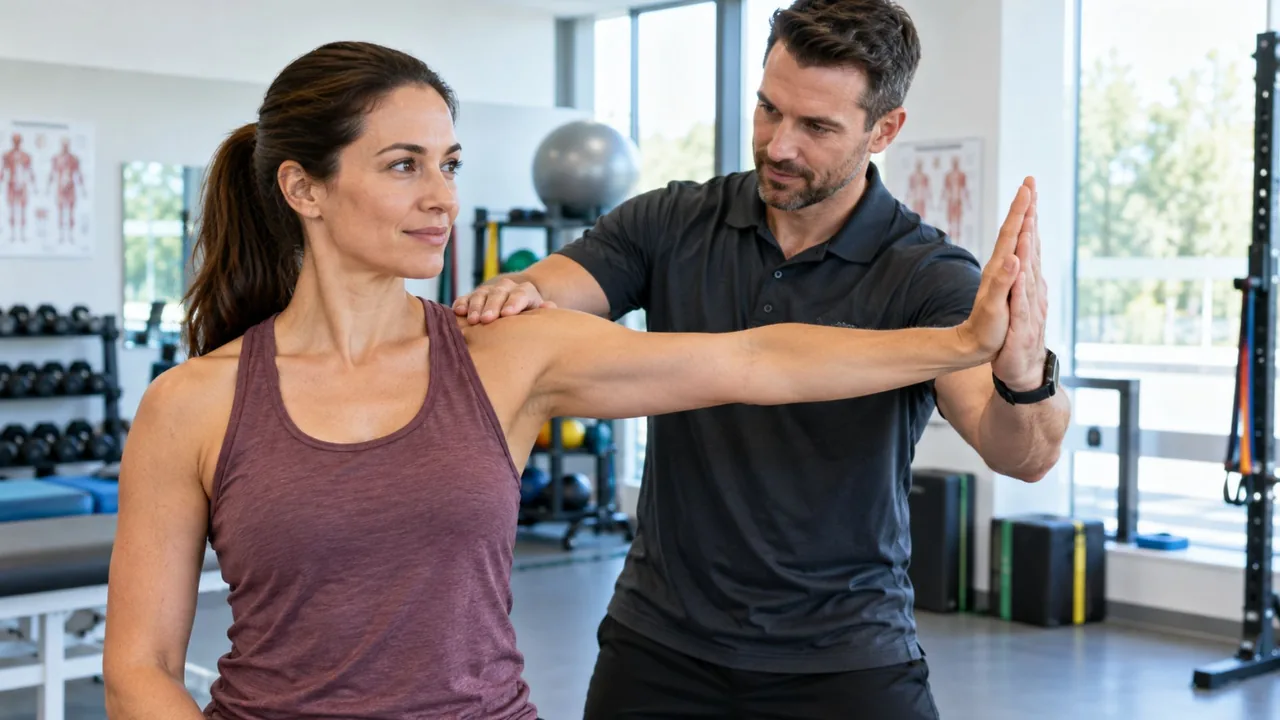
Active Release Techniques is a patented, hands-on soft-tissue system developed by P. Michael Leahy, a chiropractor, in the 1980s. The distinguishing feature is in the name: the treatment is active. The practitioner locates a specific area of tension or adhesion with their hands, applies precise pressure to it, and then the patient moves the body part through a defined range of motion while the pressure is held. The tissue is lengthened under the practitioner's contact rather than the practitioner simply pressing on it.
The working theory is that overused tissue develops adhesions — areas where layers of muscle and fascia that should glide past each other become stuck — and that those adhesions restrict motion, weaken the muscle, and can irritate or entrap nerves. ART's protocols cover several hundred specific structures, each with its own contact point and movement, which is why certification involves separate courses for the upper extremity, lower extremity, spine, and nerve entrapments.
What "ART certified" means
Certification is granted by Active Release Techniques after seminar training and practical testing, and it has to be renewed annually. It isn't a weekend add-on; each body-region course is its own credential. When you see the ART badge on a practice's site, it means at least one provider has completed that process and maintains it. Dr. Nazario holds ART certification and uses it alongside chiropractic adjustment and rehabilitative exercise rather than as a stand-alone service.
What the research shows — honestly
The published evidence for ART is limited and mostly small. A pilot study at Logan College of Chiropractic found that a single ART treatment significantly increased hamstring flexibility in twenty healthy, active men, measured by sit-and-reach. A second pilot study from the Canadian Memorial Chiropractic College found that ART raised pain-pressure thresholds in patients with adductor (groin) strains immediately after treatment. Both are pre-post studies without control groups. A 2022 systematic review in the Journal of Sport Rehabilitation reached the conclusion you'd expect from that base: the technique shows promise, and better trials are needed.
We say this plainly because the alternative — implying ART is proven for a long list of conditions — is how a lot of practices describe it, and it isn't accurate. What the evidence supports is that ART produces short-term changes in flexibility and pain sensitivity in soft-tissue injury. What clinical experience adds is that those changes, combined with an active exercise program, are often what a stubborn overuse problem needs to start moving again.
The problems it's used for
ART is applied to overuse injuries and soft-tissue restrictions. At our office that most often means:
- Shoulder and rotator cuff tightness in swimmers, lifters, and overhead workers
- Forearm, wrist, and elbow pain from keyboard, tool, or racket use — including the nerve entrapments at the elbow and wrist
- Hamstring, hip flexor, and calf tightness in runners and athletes
- Upper trapezius and neck tension from desk work — the muscles that lock up with tech neck
- Plantar fasciitis and Achilles tightness
- Long-standing chronic muscular pain that hasn't responded to stretching alone
What a session feels like
It is not a massage. The contact is specific and firm, and moving the tissue under that pressure is uncomfortable — most patients describe it as a "good hurt" and rate it a five or six out of ten. Each structure is treated for a few passes, and a full treatment of one area takes a few minutes. Some soreness for a day afterward is common. Dr. Nazario will tell you which tissues he's working, why, and what movement he needs from you; if the discomfort is more than you want, say so and the pressure comes down.
ART is almost always paired with something else: an adjustment if joint restriction is part of the picture, and a short set of exercises so the tissue that was just released has a reason to stay that way. Treating the adhesion without changing the load that created it produces a temporary result.
If the tight muscle has outlasted the stretching
If you've got a muscle or tendon problem that's been "tight" or sore for months and hasn't moved, book an evaluation or call (407) 909-4788 and mention ART. Our post on optimizing athletic performance with chiropractic care covers how it fits into training. Se habla español.
Frequently Asked Questions
- Does ART hurt?
- It's uncomfortable while it's happening — firm pressure on tender tissue during movement — and usually leaves mild soreness for a day. It shouldn't be sharp or radiating; tell the practitioner if it is.
- How many sessions does it take?
- For recent, straightforward overuse problems, changes are often felt within a few visits. Long-standing restrictions take longer. We reassess rather than sell a fixed number.
- Is ART the same as deep tissue massage or Graston?
- No. Massage works the tissue passively. Graston and other instrument-assisted methods use a tool. ART uses hands with the patient actively moving under the contact, following protocols specific to each structure.
- Can ART fix carpal tunnel syndrome?
- It's used for nerve entrapments in the forearm and wrist, and some patients improve with conservative care. It doesn't work for everyone; if symptoms persist or weakness develops, further evaluation is needed.
- Is ART safe?
- For soft-tissue overuse problems, yes, when performed by a trained provider after an exam. It's not appropriate over acute tears, fractures, active inflammation, or in some medical conditions, which is why the exam comes first.
- Do I need to be an athlete?
- No. ART was developed with athletes, but repetitive strain from desk work, manual labor, or parenting produces the same tissue problems.